REVENUE & BUDGET
FLEX Revenue & Budget Management System is a comprehensive software solution designed to track, analyze, and report on an organization’s financial performance. The system helps organizations better manage their finances and resources by providing a comprehensive view of their financial situation. It helps organizations to better understand their sources of revenue and expenses, as well as their current budget and financial performance. The system enables users to easily access financial data, analyze trends, create accurate budget forecasts and generate reports. The system also helps to identify potential areas for cost savings and to create more efficient budget.
Group Management
- Group Management in budgeting involves allocating resources to different departments.
- Budgets are based on historical performance, strategic priorities, and financial goals.
- Each group’s budget includes operating expenses, capital expenditures, and revenue targets.
- Regular performance tracking ensures alignment with organizational objectives.
- Categories like fixed and variable costs help optimize resource allocation.
- Adjustments are made as needed to ensure efficient use of resources.
- This approach supports overall financial success and departmental needs.
Channel Management
- Identify and Select Distribution Channels: Choose the best channels for your products/services (e.g., direct sales, wholesalers, retailers, e-commerce).
- Channel Compliance: Ensure all practices align with laws, regulations, and agreements with channel partners.
- Monitor Channel Performance: Track and evaluate how well each channel is performing.
- Maintain Relationships: Build strong relationships with channel partners for smooth operations.
- Optimize Channels: Continuously improve channel strategies to enhance market reach and customer satisfaction.
Dynamic Pricing
- Monitor Market Conditions: Continuously track market demand, competitor prices, and other influencing factors.
- Utilize Data Sources: Leverage historical sales, website traffic, and external variables (e.g., weather, events) for pricing decisions.
- Adjust Pricing: Prices are dynamically adjusted based on real-time data and demand fluctuations.
- Event Ticket Pricing: Vary ticket prices based on factors like seat location and event demand.
- Optimization: Aim for maximum revenue while maintaining customer satisfaction and competitiveness.
Demand Forecasting
- Inventory Optimization: Ensure inventory levels align with customer demand, avoiding overstock or stockouts.
- Expert Judgment: Use market research, Delphi method, and focus groups to gather insights for forecasting.
- Data-Driven Techniques: Analyze historical data, trends, and patterns to predict future demand.
- Seasonality Considerations: Account for seasonal variations in customer preferences and purchasing behavior.
- Improved Decision-Making: Enhance strategic planning and resource allocation by anticipating demand shifts.
Revenue Estimations
- Expert Judgment: Utilize market research, Delphi method, and focus groups for subjective insights.
- Historical Data Analysis: Examine past demand patterns and trends to forecast future revenue.
- Statistical Techniques: Apply methods like moving averages and exponential smoothing for predictions.
- Market Trends: Account for changing market conditions to refine revenue forecasts.
- Data-Driven Decisions: Improve accuracy and strategy by combining expert opinion with data analysis.
Rate Recommendation
- Relevance to Situation: Rate how closely the recommendations address your unique challenges and goals.
- Rating Scale: 1 (Not Relevant) to 5 (Highly Relevant)
- Expected Impact on Revenue and Budget: Evaluate the potential improvement in revenue and budget management.
- Rating Scale: 1 (Low Impact) to 5 (High Impact)
Competitor Information
- Expected Impact on Revenue and Budget: Evaluate how competitor analysis can influence your revenue and budget strategy.
- Rating Scale: 1 (Low Impact) to 5 (High Impact)
- Competitor Occupancy Analysis: Examine competitors’ occupancy rates and patterns.
- Action: Identify peak and off-peak periods to plan promotional strategies effectively.
Budgetary Control
Budget Creation: Estimate revenues and expenses for departments or projects using historical data, market conditions, and strategic goals.
Execution Phase: Once the budget is approved, allocate resources, assign responsibilities, and implement projects or activities as planned. This phase ensures that the organization stays within the financial limits set by the budget while meeting its strategic objectives.
Break Even Analysis
Break-even analysis is a financial tool used by businesses to determine the point at which they cover all their costs and start generating a profit. It helps businesses understand the relationship between their costs, revenue, and profit.
These are the costs that do not change with the level of production or sales. Examples include rent, salaries, insurance, and depreciation.
Ratio Analysis
Ratio analysis is a financial analysis technique that involves evaluating a company’s financial performance and health by examining the relationships between various financial variables in its financial statements.
By comparing these ratios to industry benchmarks or historical data, analysts can identify strengths and weaknesses in a company’s financial performance.
Reporting and Analytics
The first step in reporting and analytics is collecting data. This data can come from various sources, including internal databases, external sources, spreadsheets, sensors, and more. Data collection methods may include manual data entry, automated data retrieval, or real-time streaming.
After collecting data, it often needs to be integrated and consolidated from various sources into a unified format. This step ensures that the data is clean, consistent, and ready for analysis.
Integration with Accounting Systems
Basic integration involves importing and exporting data between your accounting system and other software applications. This can include importing bank transactions, invoices, and expense reports.
Many accounting software providers offer Application Programming Interfaces (APIs) that allow you to connect your accounting software with other applications, enabling real-time data exchange.
Key Performance Data
Key Performance Data, often abbreviated as KPIs (Key Performance Indicators), are measurable metrics that organizations use to evaluate and track their performance in various aspects of their operations.
These metrics are crucial for assessing the effectiveness of processes, strategies, and initiatives, helping organizations make informed decisions and improvements. KPIs can vary widely depending on the industry, organization, and specific goals, but here are some common categories.
Dashboard View
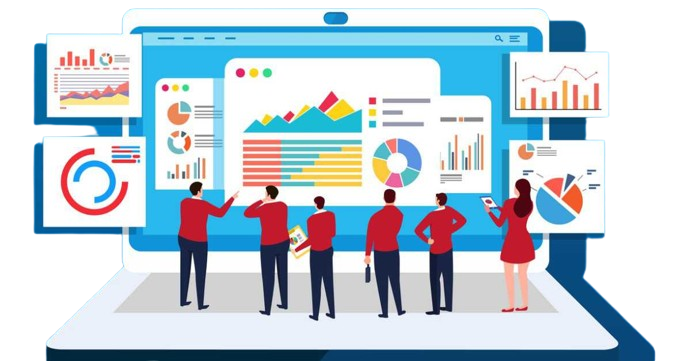
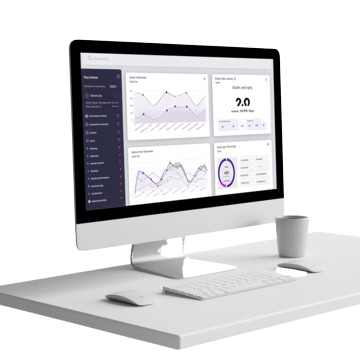
A dashboard view in the context of revenue and budget typically refers to a visual representation of key financial data and metrics designed to provide a quick and easy way to monitor and analyze the financial performance of a business or organization.
Dashboards can be created using various business intelligence (BI) tools, spreadsheet software like Microsoft Excel, or specialized financial software.